Being ready for surprises

Wednesday, 7 September, 2011
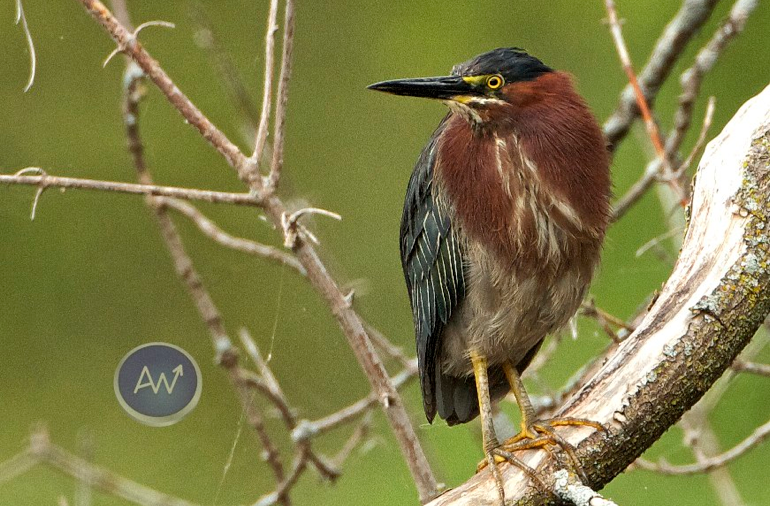
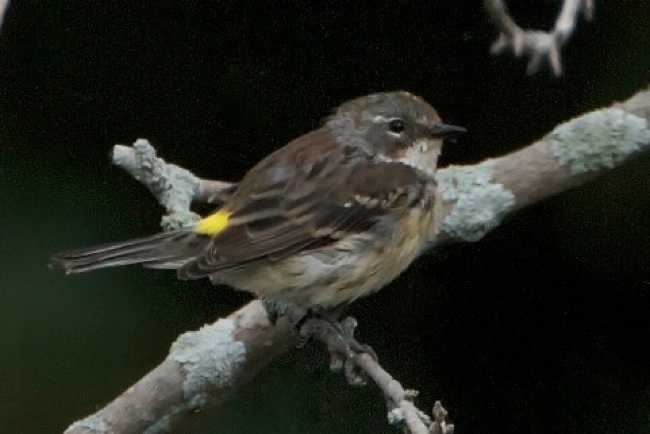
A few weeks ago, I posted about almost achieving success with one of my nemesis birds, the Belted Kingfisher. Yesterday, I thought I would venture out again to try my luck again and maybe get a better image of the Kingfisher. As it turned out, I could see and hear the Kingfishers from a distance but they never landed close, let alone on the particular perch that they normally would frequent. So there I sat for 3 hours under my blind patiently waiting but as any birder knows, if you are patient something will eventually show up. In this case, I had a few nice surprises. The first surprise involved several migrating warblers who were foraging in the small trees above and beside me but I was too close to focus! A Yellow-rumped landed close to the area I was focused on for the Kingfisher.
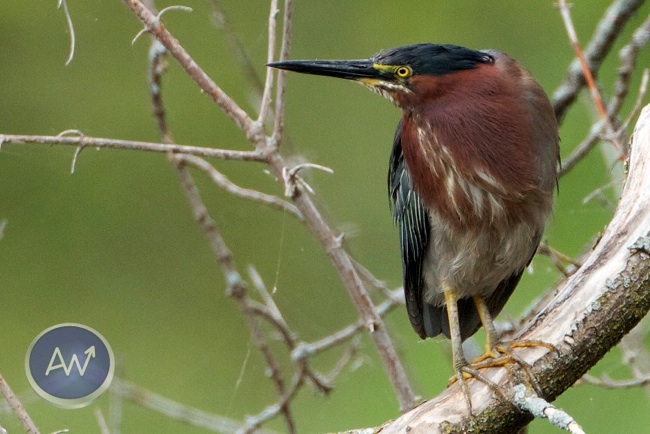
Green Heron
I changed positions opting for a position closer to a slow moving creek. As I waited patiently, I was startled by the ‘skeow’ alarm call of a Green Heron as it landed on branch within my viewfinder. This was a real treat for me since I haven’t really a decent Green Heron in my library. I think I do now!
migrating Yellow-rumped Warbler
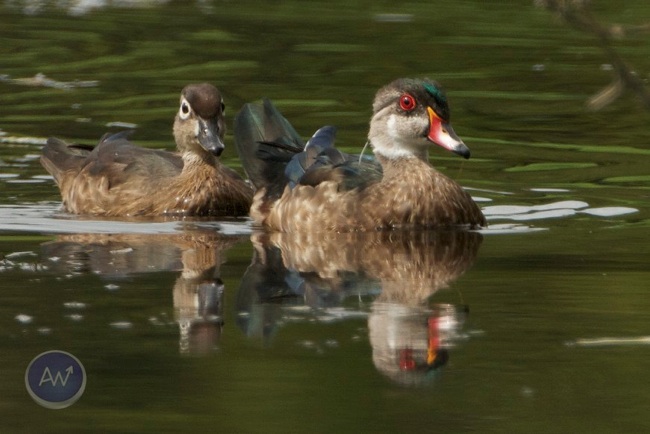
According to the Cornell Lab of Ornithology, ‘Wood Ducks thrive in bottomland forests, swamps, freshwater marshes, and beaver ponds. Wood Ducks seem to fare best when open water alternates with 50–75% vegetative cover that the ducks can hide and forage in. This cover can consist of downed trees, shrubs such as alder, willow, and buttonbush, as well as emergent herbaceous plants such as arrowhead.’
This is certainly the case regarding these Wood Ducks. When I arrive at this location, they fly away but soon return to preen and hide under fallen Manitoba Maple limbs. The brilliant coloured male remained teasingly out of range.
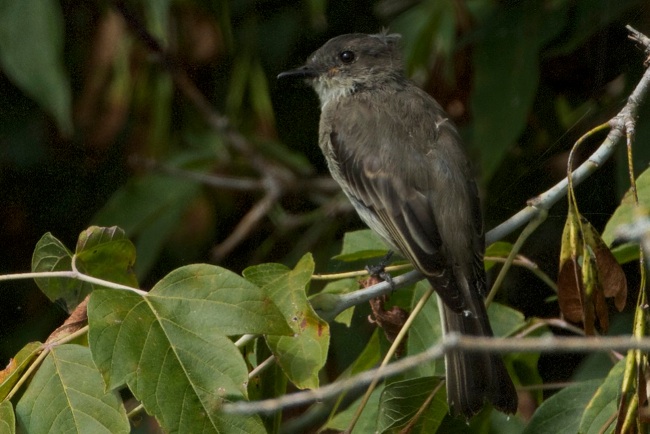
I couldn’t help but notice the activity of flycatchers darting in and out for insects. It wasn’t until I took a closer look at my images that I realized that there was two different species, Eastern Phoebe and what I believe is a Eastern Wood Pewee.
Female Adult Wood Duck with young
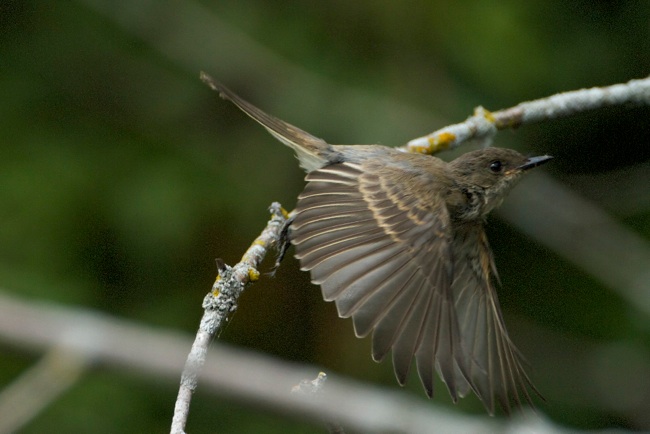
Eastern Phoebe
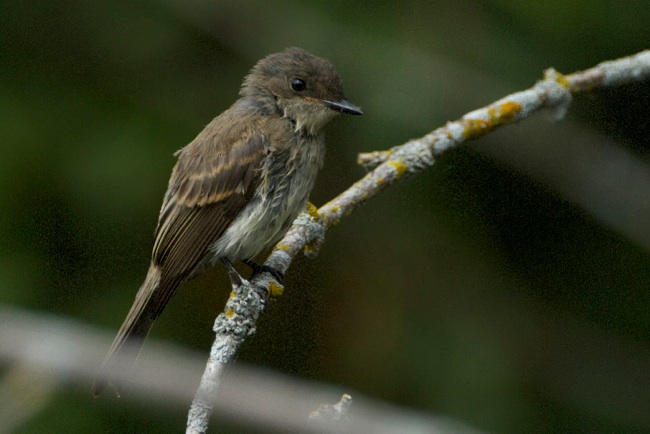
Eastern Wood Pewee
Eastern Wood Pewee